Key Takeaways
- Bacteria and plaque build up while you sleep, and morning breath is the usual sign.
- Brushing first thing clears that overnight buildup before your first bite.
- If you brush after eating, wait 30 minutes so softened enamel isn’t scrubbed.
- Water, sugar-free gum, or fluoride mouthwash can hold you over while you wait.
- Sensitivity, bleeding gums, or lasting bad breath are worth a visit.
Your Morning Routine, Two Ways
You stumble into the bathroom, and there’s a decision waiting. Toothbrush now, or after the toast and coffee? Maybe you’ve heard both answers from different people, and neither one stuck. The team at Outdoor Dental hears this question often during dental exams and cleanings.
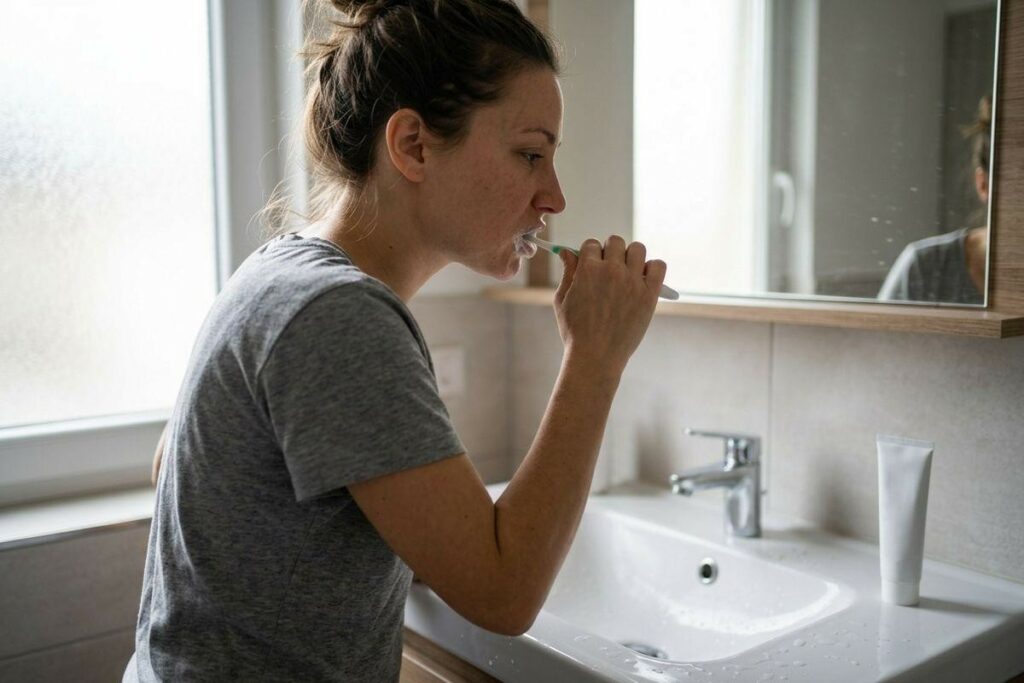
Brushing before breakfast is usually the better choice, because it clears out the bacteria that collected overnight before food and drink hit your teeth. That said, brushing after breakfast can work too, as long as you give your mouth a little time first.
What Happens in Your Mouth Overnight
Saliva production slows down while you sleep. That gives bacteria and plaque a quiet stretch of hours to settle in along your teeth and gums.
Morning breath is the usual sign. That thick, fuzzy feeling on your teeth when you wake up isn’t your imagination, it’s the buildup you’re about to swallow with your first sip of coffee. If bad breath sticks around all day, decay may be part of the picture.
Why Most Dentists Prefer a Brush Before Breakfast
Brushing before you eat clears the overnight bacteria out of the way instead of washing it down with breakfast. It also leaves a fluoride coating on your teeth before acidic foods like orange juice or grapefruit show up.
There’s one more perk. Brushing gets saliva flowing again after a slow night, which helps your mouth do its own cleanup work through the morning.
The Minty Toothpaste & Orange Juice Problem
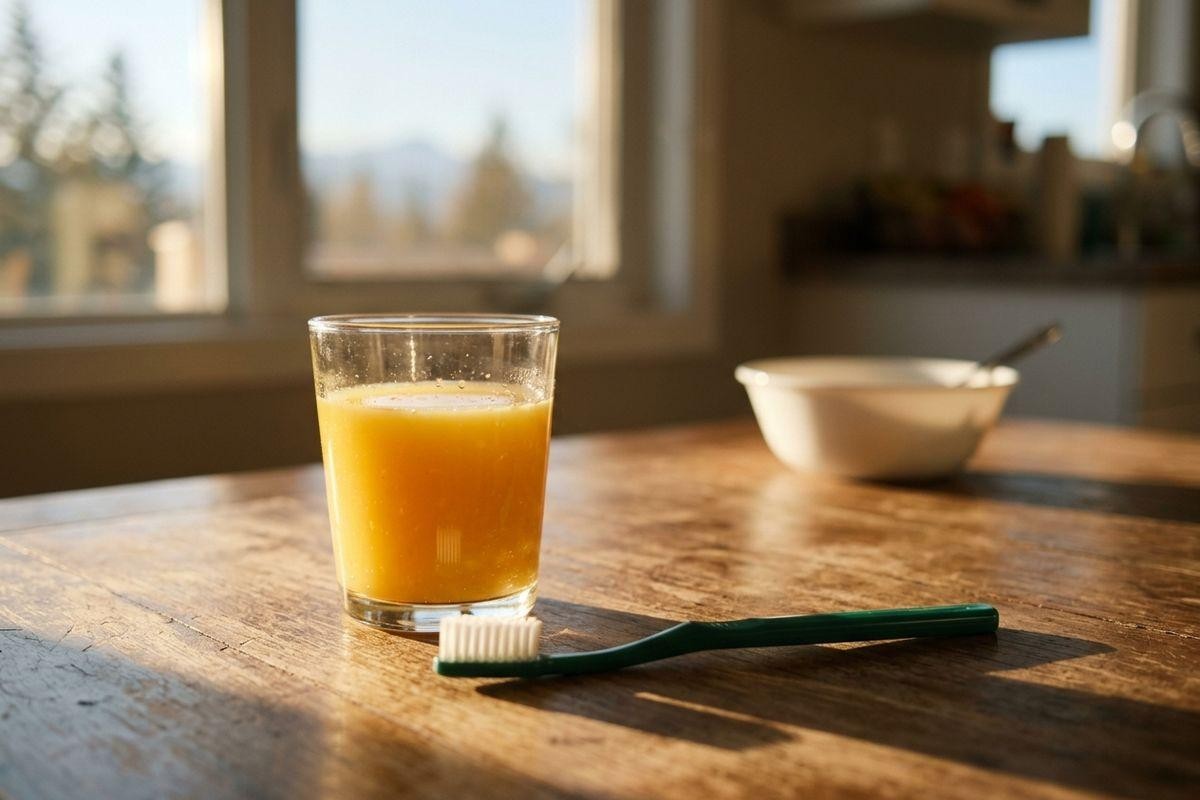
Anyone who has sipped orange juice right after brushing knows the taste is rough. The mint and the citrus clash, and it can put you off breakfast entirely.
An SLS-free toothpaste is one option worth trying. Many people find the flavour clash much milder, so you can keep brushing first without giving up your juice. A look at natural toothpaste options can help you narrow the shelf down.
What to Know If You Brush After Breakfast
If you’d rather brush on your way out the door, timing matters. Acidic foods soften your enamel, and brushing right away means scrubbing enamel while it’s in that softened state.
Wait about 30 minutes after eating. Coffee, citrus, and pastries all count, so most typical breakfasts fall into this category. Several of the foods that wear teeth down show up on breakfast tables.
Quick Fixes While You Wait
You don’t have to sit there with a coffee-coated mouth for half an hour. A few simple options can tide you over.
- Rinse with plain water right after eating.
- Chew sugar-free gum to get saliva moving.
- Swish with a fluoride mouthwash for fresher breath.
How to Build a Morning Routine That Sticks
The 2 2 2 rule keeps things easy to remember. Brush for two minutes, twice a day, and see a dentist twice a year. If you’re wondering how often teeth should be cleaned, that twice-yearly mark is a good starting point.
Two minutes feels longer than you’d think at 6:00 a.m. before an early rink time. Try setting a timer on your phone, or brush through one song while the kids get their skates and bags together. Busy Seton mornings go faster when brushing happens first, before anyone touches a bowl of cereal.
Habits That Wear Teeth Down
Sugary drinks and constant snacking keep your teeth under acid attack all day long. Sipping a sports drink through a whole hockey practice does more damage than drinking it in one go, and it raises the odds that cavities take hold.
Skipped brushing and missed cleanings add up too. Plaque that stays put hardens into tartar, and at that point a toothbrush can’t reach it.
When to See a Dentist in Seton About Your Routine
A few signs are worth mentioning at your next appointment.
- Teeth that twinge with cold air, cold water, or sweets.
- Gums that bleed when you brush or floss.
- Bad breath that hangs around no matter how well you brush.
Regular cleanings and exams give the team a chance to catch small problems while they’re still small. They can also watch how your enamel and gums are holding up over time, which tells them more than any single visit can.
Your brushing habits are worth talking through as well. A Seton dentist can look at where plaque keeps showing up and suggest a change to your angle, your brush, or your timing that actually fits your mornings. Sensitive teeth often improve with small adjustments like these.
Book Your Next Visit
Brushing before breakfast is the simpler, safer bet for most people. If after works better for your schedule, just give it that 30 minute window.
The team at Outdoor Dental in Seton Calgary SE can review your routine, clean away what your brush can’t reach, and answer the questions you’ve been meaning to ask. Book your cleaning and exam today.