
You’ve lost a tooth, and you’re wondering if dental implants are worth the investment. Maybe you’re concerned about how often you’ll need replacements or whether they’ll hold up to your active Calgary lifestyle, from hitting the slopes at Nakiska to enjoying a game of hockey.
Dental implants can last 25 years or longer with proper care, making them one of the most durable tooth replacement options available. The titanium implant itself may never need replacement, though you might need a new crown after 10–15 years of normal use.
What Are Dental Implants & How Do They Work?
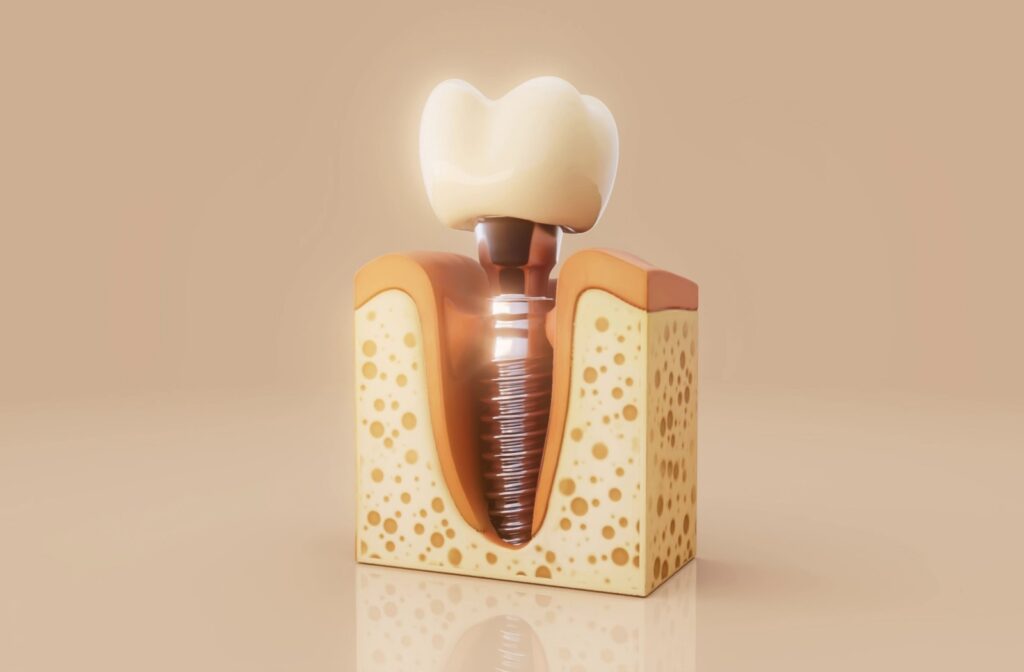
A dental implant replaces your missing tooth from the root up. The dentist places a titanium screw directly into your jawbone where your natural tooth root used to be. This titanium post acts as your new tooth foundation.
Once the implant heals, a connector piece called an abutment attaches to the top. Your custom crown then connects to this abutment, giving you a complete replacement tooth. The process called osseointegration allows your bone to grow around and bond with the titanium implant, creating a solid anchor for your new tooth.
How Long Can Your Dental Implants Last?
The Implant Itself
The titanium implant in your jawbone can function for 25 years or more when you take good care of it. Research shows a 90–95% success rate over 10 years, meaning most people can keep their implants without problems for at least a decade.
Many patients never need their actual implant replaced. Once your bone fuses with the titanium, you have a stable foundation that can handle normal chewing forces for decades.
The Crown Replacement
Your implant crown typically lasts 10–15 years before needing replacement. This happens because crowns experience daily wear from chewing, grinding, and normal use—just like your natural teeth.
Think of it like the tires on your car. The engine might run for hundreds of thousands of kilometres, but you’ll replace the tires several times. Your implant post stays put while the crown gets refreshed when needed. Same-day crowns offer a convenient option when your crown needs updating.
What Can Make Your Implants Fail
Poor Oral Care Habits
Skipping your daily brushing and flossing allows plaque to build up around your implant. This can lead to gum disease, which can progress to peri-implantitis, a serious condition that damages the bone supporting your implant.
Smoking poses another major risk. It reduces blood flow to your gums and jawbone, making it harder for your body to maintain the bone around your implant.
Health & Lifestyle Factors
Grinding or clenching your teeth puts extra pressure on your implants. Over time, this force can loosen the implant or damage the surrounding bone. Your dentist might recommend a night guard to protect your investment.
Certain health conditions, like uncontrolled diabetes, can interfere with healing and bone maintenance. Some medications also affect how well your bone integrates with the implant.
How to Make Your Implants Last Longer
Brush your teeth twice daily and floss around your implants just like you would with natural teeth. Use a soft-bristled toothbrush and be gentle around the implant site to avoid irritating your gums.
Schedule regular checkups with your dentist every 6 months. These visits allow early detection of any problems before they become serious. Your dental team can also professionally clean around your implants to remove buildup you might miss at home.
Avoid using your teeth as tools to open packages or crack nuts. Don’t chew on ice, pens, or other hard objects that can damage your crown or put excessive stress on your implant. Proper implant care includes protecting them from unnecessary force.
What Happens If Your Implant Fails?
Signs of Implant Problems
You might feel pain when biting down or chewing food around your implant. This discomfort often signals that something isn’t right with the implant or surrounding tissues.
Watch for swelling, bleeding, or tenderness around your implant site. A loose or shifting implant is another clear sign that needs immediate attention from your dentist.
Treatment Options Available
If your implant fails, your dentist might need to remove it and allow the area to heal. Depending on the cause of failure, you could be a candidate for a new implant after the site recovers.
Sometimes bone grafting helps rebuild the foundation needed for a replacement implant. If another implant isn’t possible, you still have options like bridges or dentures to restore your smile and chewing function.
Dental Implants Made Simple
Dental implants offer remarkable longevity when you maintain good oral health and follow your dentist’s care recommendations. At Outdoor Dental in Seton, our team uses technology to place implants with precision and help you understand how to care for them properly. Contact us today to learn more about how dental implants can give you a lasting solution for your missing teeth.